
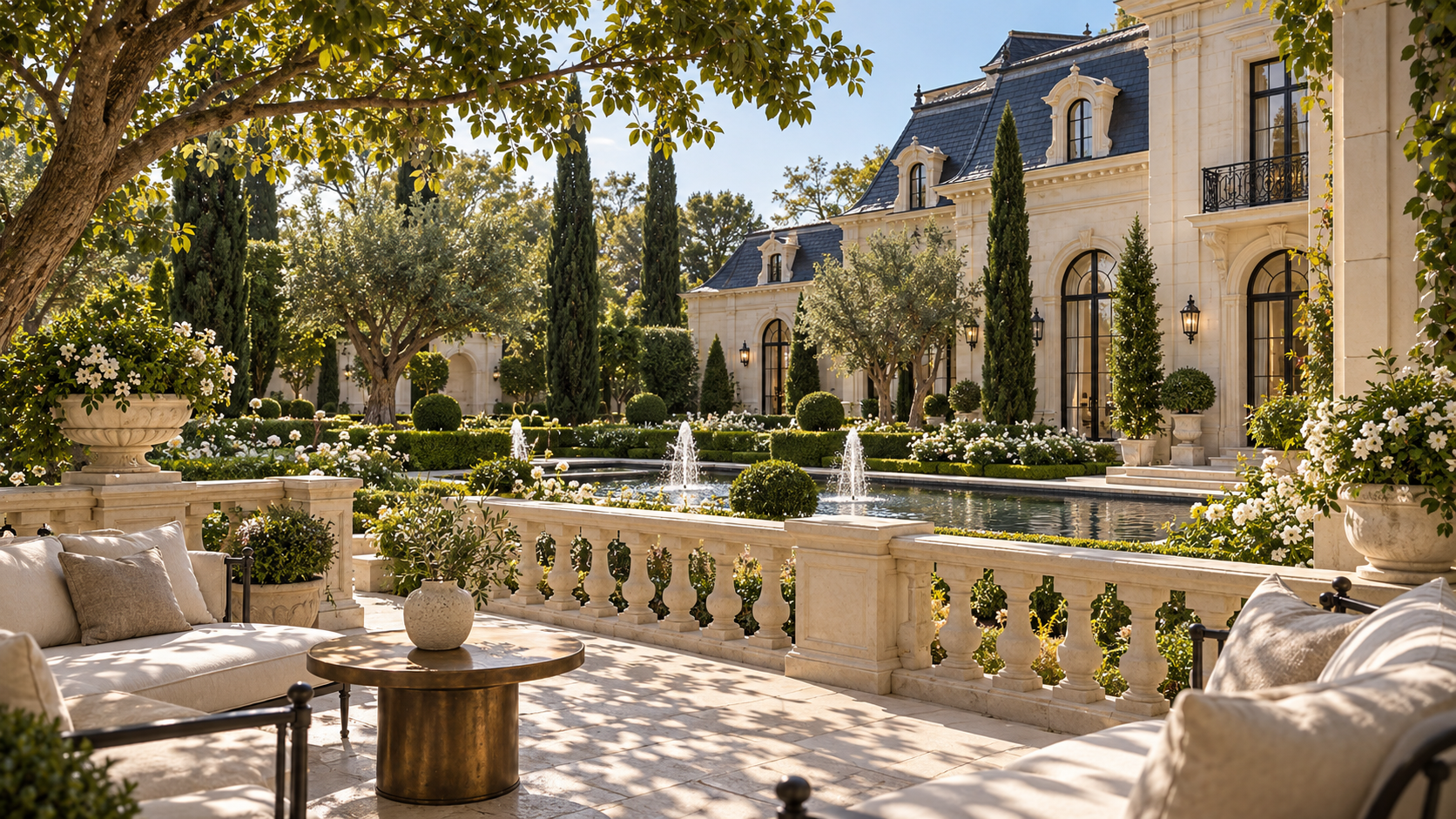
A garden at the centre of a composition changes the relationship between its buildings. Windows face something shared. Paths acquire a destination. The spaces between façades become places in their own right, rather than distances to cross.
The garden also brings a different measure of time. A façade may appear fixed, but leaves move, shadows lengthen and planting changes with the seasons. Seen from a balcony or encountered on foot, these small variations give familiar surroundings a renewed sense of presence.
In our conceptual landscapes, formal geometry provides the first structure: an avenue, a framed lawn, a court around water. The detail should then serve ordinary use. There must be room to pause, shade where it is needed and routes that feel natural. A central garden succeeds when its design becomes part of daily habit: a short walk, a conversation, a moment outdoors before returning home.
Back to the journal